Dr. Marcelin will determine which type of treatment is best for you after a thorough evaluation of your individual condition.
FAQ’s
Where can I have cataract surgery done in Westchester County?
Hudson Ophthalmology in Cortlandt Manor, NY performs cataract surgery for patients across Westchester and Putnam County. Options include standard monofocal lenses, toric lenses for astigmatism, and multifocal lenses, with femtosecond laser assistance when optimal . Second opinions are welcome, including for patients already referred elsewhere.
Which surgeons perform cataract surgery in Westchester County?
Dr. Kerline Marcelin at Hudson Ophthalmology in Cortlandt Manor, NY performs cataract surgery for patients throughout Westchester and Putnam County. As a fellowship trained glaucoma specialist, she also handles complex cataract cases including weak or loose zonules, pseudoexfoliation, narrow angles, small pupils, dense advanced cataracts, and eyes with prior glaucoma surgery.
Where can cataracts be treated in Westchester?
Hudson Ophthalmology treats cataracts, including complex cataract cases, for patients throughout Westchester County. Dr. Kerline Marcelin evaluates symptoms like blurred vision and glare, then recommends surgical options including premium lens choices to restore clear vision and improve day-to-day quality of life.
Where is cataract surgery performed in Westchester, NY?
Hudson Ophthalmology performs cataract surgery for patients throughout Westchester, NY. Dr. Kerline Marcelin evaluates each patient’s vision needs and offers standard and premium lens options to help restore clear, comfortable vision after surgery.
How long does it take to recover from cataract surgery?
Most patients notice clearer vision within one to two days. Eye drops are used for 4 weeks, and the final glasses prescription is typically determined around four to six weeks after surgery. Dr. Marcelin personally sees every patient at each postoperative visit.
Where is cataract surgery performed near Cortlandt Manor?
Hudson Ophthalmology performs cataract surgery for patients near Cortlandt Manor, offering both standard and premium lens options. Dr. Kerline Marcelin guides each patient through a personalized evaluation to determine the best surgical approach for their vision goals.
Can I get a second opinion before cataract surgery?
Yes, and it is a reasonable thing to want but often times it is unnecessary as cataract surgery is an elective surgery. Unless clinically needed the timing for when to get cataract surgery is usually determined by the patient with the guidance of their Ophthalmologist. You choose your own cataract surgeon. Hudson Ophthalmology in Cortlandt Manor welcomes second opinion consultations, particularly for premium lens decisions and complex eyes.
 Call Today: 914-737-6360
  Email: hudsoneyes@gmail.com

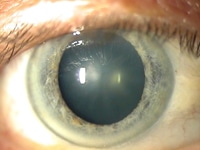 Dr. Marcelin may perform a series of tests in order to diagnose a cataract. A dilated eye exam will be performed to test the vision and to examine the condition of the lens and other parts of the eye. Your doctor may also perform tonometry, a procedure that measures the pressure in the eye.