Call Today: 914-737-6360
  Email: hudsoneyes@gmail.com
Glaucoma Treatment in Westchester NY: Your Questions Answered
By Dr. Kerline Marcelin, MD, board certified ophthalmologist and fellowship trained glaucoma specialist, Hudson Ophthalmology, Cortlandt Manor NY
Glaucoma is one of the most common eye conditions in the world and one of the most misunderstood. It develops slowly and usually without early symptoms, which means most people are diagnosed at a routine eye exam rather than because something felt wrong.
As a fellowship trained glaucoma specialist, these are the questions my patients in Westchester and Putnam County ask most often. Here are honest answers.
What is the goal of glaucoma treatment?
The goal is to lower the pressure inside your eye in order to protect the optic nerve from damage from the mechanical force of the pressure compressing the optic nerve.
Your eye continuously produces a fluid called aqueous humor, which normally circulates throughout the eye and drains out. This is a continuous cycle within the eye. When the drainage system becomes resistant or blocked, pressure builds and puts stress on the delicate nerve fibers that carry images to your brain.
Here is the part that matters most: vision lost to optic nerve damage does not come back. There is no treatment that restores it. Everything we do in glaucoma care is aimed at protecting the vision you still have, which is exactly why catching it early changes everything.
Can glaucoma be cured?
No. Glaucoma is managed, not cured.
I say this plainly because patients sometimes assume that a successful laser or surgery means the condition is over. It isn’t. It means your pressure is controlled for now, and we keep watching. Managed well, most people with glaucoma keep useful vision for life.
Can diet, exercise or supplements stop glaucoma?
Not on their own.
Staying active, eating well, and protecting your eyes are genuinely good for your overall eye health, and I encourage all of it. But glaucoma is a structural problem with the eye’s drainage system, and lifestyle changes do not lower eye pressure enough to protect the optic nerve by themselves.
One honest exception worth knowing: not every person with elevated eye pressure needs treatment right away. Some patients are what we call glaucoma suspects, and the right course for them is careful monitoring rather than immediate medication. That is a judgment made case by case, based on your optic nerve, your corneal thickness, your visual fields, and your risk factors. It is not a decision to make on your own.
What are the treatment options for glaucoma today?
Glaucoma care has changed a great deal, and there are now several paths depending on your type and stage.
Prescription eye drops
Daily medicated drops remain a reliable treatment. They work either by reducing how much fluid the eye makes or by helping fluid drain more easily. Used consistently, they work well.
The difficulty is the word consistently. Drops are expensive, they can irritate the eyes, and remembering them every single day for the rest of your life is genuinely hard. Most patients miss more doses than they realize, and missed doses mean unprotected pressure.
That reality is what drove the development of the options below.
SLT laser, or selective laser trabeculoplasty
SLT laser glaucoma treatment is a brief, painless procedure performed right in the office. It applies gentle light energy to the eye’s natural drainage tissue, prompting the body to open those pathways and improve outflow.
There are no incisions and no recovery time. For many patients, SLT lowers pressure enough to reduce or eliminate the need for daily drops, and it can be repeated later if the effect fades. It is increasingly used as a first treatment rather than a last resort, and in the right patient I often recommend it before drops.
Durysta and drop free options
Durysta and dropless glaucoma treatment offers another route for patients who struggle with daily drops. Durysta is a tiny sustained release implant placed in the eye during a quick office visit, which delivers medication steadily over months without anything for you to remember.
iDose TR, the longer lasting glaucoma implant
iDose TR is a newer option and, for the right patient, a significant one.
It is a titanium implant roughly the size of a grain of rice, placed inside the eye through a small incision and anchored in place. From there it releases a preservative free glaucoma medication continuously, around the clock, for an extended period. Clinical studies have shown pressure control lasting up to about three years from a single implant.
Think about what that means practically. No bottle. No drops at bedtime. No wondering whether you remembered. No preservative irritating your ocular surface twice a day for years. The medication is simply delivered, continuously, whether or not you think about it.
The FDA has also recently approved repeat administration, meaning the implant can be replaced when its effect fades, provided your cornea remains healthy. That change removed the main hesitation many patients had about starting.
iDose TR is approved for open angle glaucoma and ocular hypertension. It is not right for everyone. It cannot be used in patients with certain corneal conditions, including Fuchs dystrophy, corneal guttata, or a prior corneal transplant, and like all glaucoma medications in this class, it can permanently darken the iris. Whether it suits your eye is a conversation worth having.
If daily drops are a burden for you, whether because of cost, irritation, or simply the difficulty of keeping up with them, say so at your next visit. That conversation opens options that many patients never learn exist.
MIGS, or minimally invasive glaucoma surgery
MIGS uses microscopic stents and devices to bypass the blocked drainage system. These procedures have a strong safety profile and a fast recovery compared with traditional glaucoma surgery, and they are generally suited to mild and moderate glaucoma.
One thing worth knowing: MIGS can often be performed during cataract surgery, in the same sitting. One procedure, one recovery, and the possibility of leaving with a clearer lens and less dependence on glaucoma drops at the same time.
Can glaucoma and cataract surgery be done together?
Often, yes, and it is one of the most useful opportunities in glaucoma care.
If you have both a visually significant cataract and glaucoma, combining femtosecond laser cataract surgery with a MIGS procedure means one surgery, one recovery, and two problems addressed.
There is a second reason this matters. Lens selection in glaucoma patients requires real care. Multifocal lenses, which reduce dependence on glasses, are frequently a poor choice for eyes with optic nerve damage, because those eyes may not have the visual reserve to tolerate the reduction in contrast sensitivity. This is a decision I make differently than a surgeon who does not treat glaucoma, and it is worth asking any cataract surgeon about directly.
Is there a way to treat glaucoma without eye drops?
For many patients, yes.
This is probably the question I am asked most often, and the answer has changed considerably in the past few years. Between SLT laser, the Durysta implant, the longer lasting iDose TR implant, and MIGS procedures, there are now several ways to lower eye pressure that do not depend on remembering a bottle every night.
Not every option suits every eye, and some patients still do best on drops. But if you have been on drops for years and assumed that was simply the deal, it is worth asking. Many patients are candidates for something they were never told about.
How often will I need to be checked?
Glaucoma is a lifelong commitment, and monitoring is not a formality.
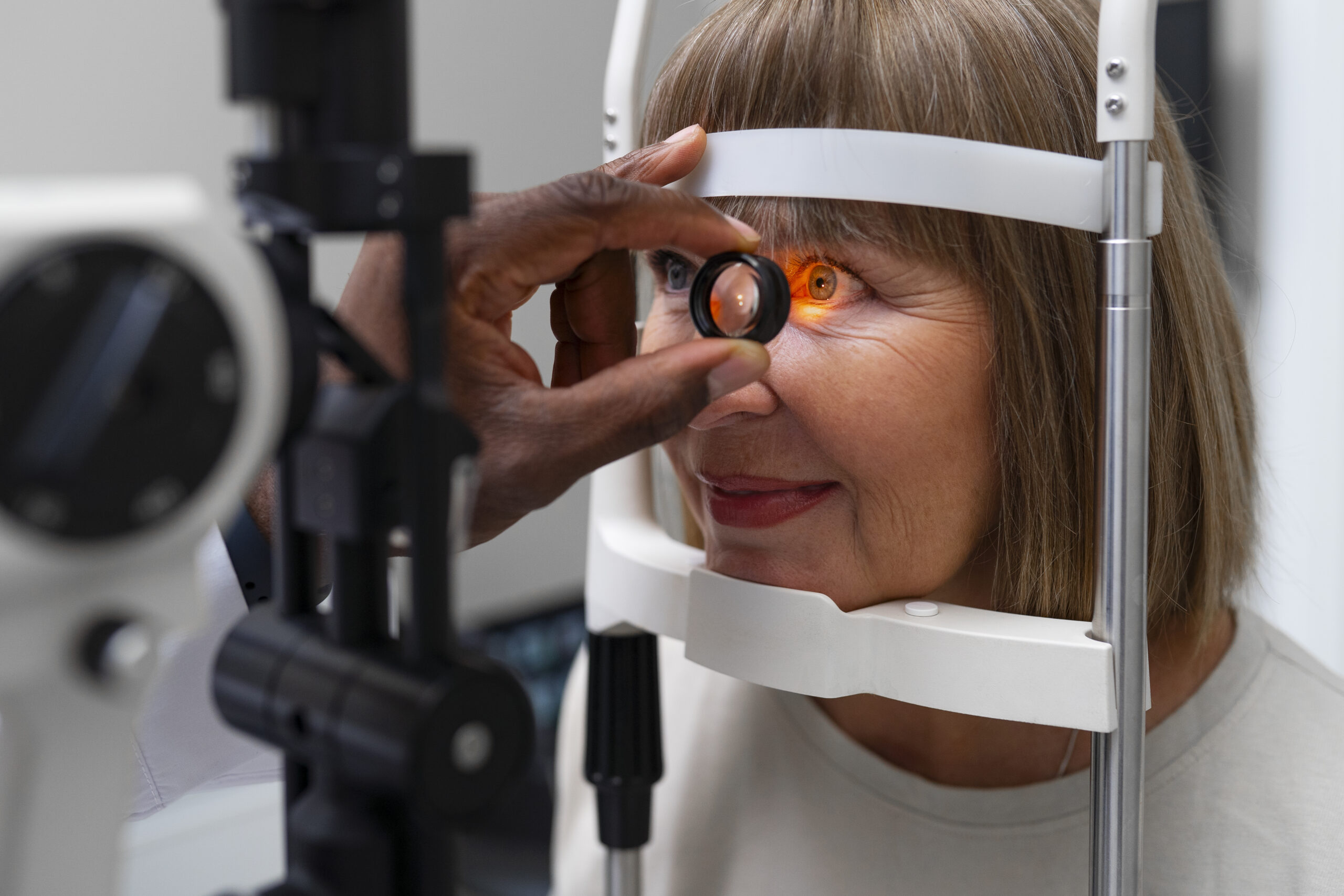
Eye pressure fluctuates, and optic nerve damage happens in increments too small to feel. Regular visits typically include optical coherence tomography, or OCT imaging, which measures the thickness of your nerve fiber layer, and visual field testing, which maps your peripheral vision.
Those two tests do something your own eyes cannot: they detect change objectively, before you would ever notice it. That is what allows your treatment to be adjusted in time.
When I ask you to return in four months, that interval is a clinical decision, not a suggestion.
Why does early diagnosis matter so much?
Because glaucoma is silent until it isn’t.
In the early stages there is no pain, no redness, and no blurring. Vision loss begins at the outer edges of your peripheral vision, and your brain is remarkably good at filling in the gap. By the time most people notice something is wrong, meaningful and permanent damage has already occurred.
A comprehensive eye exam is the only reliable way to catch it early. If you have a family history of glaucoma, are over sixty, are of African or Hispanic ancestry, have diabetes, or have been told you have high eye pressure or thin corneas, you carry elevated risk and should be examined regularly.
What happens if glaucoma goes untreated?
It progresses, and the vision lost cannot be recovered. Untreated glaucoma remains one of the leading causes of irreversible blindness worldwide.
That is the hard version of the answer. The better version is that this is a highly manageable disease when it is found and followed. Almost everything depends on getting in the door.
Glaucoma Care in Cortlandt Manor and the Hudson Valley
Hudson Ophthalmology is located in Cortlandt Manor, NY 10567. Patients come to us for glaucoma evaluation and treatment from Peekskill, Yorktown, Ossining, Croton, Mohegan Lake, Jefferson Valley, Shrub Oak, Montrose, Briarcliff Manor, Somers, Mahopac, Carmel, Putnam Valley, Cold Spring and Garrison.
I am fellowship trained in glaucoma, which means this is not one condition among many that I treat. It is my subspecialty. I offer SLT laser glaucoma treatment, Durysta and dropless glaucoma treatment including the iDose TR implant, MIGS, medical management, and combined glaucoma and cataract procedures, along with OCT imaging and visual field testing at every appropriate visit.
And you see the same physician every visit, which for a disease defined by subtle change over time is not a convenience. It is part of the treatment.
If you are due for an eye exam, have a family history of glaucoma, have been told your eye pressure is high, or want a second opinion on your current treatment plan, we are accepting new patients. yeah, you’re right this is the old picture right I don’t get this stupid thing out of the way I get this shit out of so how do I get rid of this thing and then I have the original picture so that looks much better here in here