Call Today: 914-737-6360
 Email: hudsoneyes@gmail.com

Glaucoma Specialist in Westchester: Why Credentials and Fellowship Training Matter
When patients walk into my practice at Hudson Ophthalmology in Cortlandt Manor, they often carry a mix of worry and confusion. Hearing that you have or might have glaucoma can be overwhelming. Glaucoma is often called the silent thief of sight because it typically progresses gradually without early warning signs or physical pain. By the time many people notice changes in their vision, irreversible damage has already occurred.
As an eye surgeon who has spent decades dedicated to preserving vision across Westchester, I always tell my patients that knowledge is your first line of defense. Understanding who is caring for your eyes, the level of specialized training they possess, and the professional standards that guide their work is vital in your treatment journey.
I want to share a closer look at what goes into expert glaucoma care, why specialized training matters, and how organizations like the American Board of Ophthalmology, the American Glaucoma Society, and The Glaucoma Foundation shape the care you receive.
What Does Board Certification Really Mean?
When you choose an eye physician, you will often see the term board certified. But what does that actually require?
In the United States, board certification in eye care is governed by the American Board of Ophthalmology. Founded in 1916, the ABO holds the distinction of being the very first medical specialty certification board established in the country. It operates as an independent, non-profit institution dedicated to maintaining rigorous standards of medical and surgical care.
To become a Board-Certified Diplomate of the ABO, an ophthalmologist must go far beyond completing medical school and residency. We undergo exhaustive testing, including both a comprehensive written qualifying examination and an intense oral examination. This dual-step process tests a physician’s diagnostic judgment, surgical decision making, and ability to handle complex patient care scenarios safely and ethically.
When you see a board-certified ophthalmologist, you know your doctor has met established nationwide benchmarks for clinical excellence and is committed to continuous medical education.
The Value of Glaucoma Fellowship Training
While medical school and a three-year ophthalmology residency provide a thorough foundation in medical and surgical eye care, glaucoma is a remarkably subtle and multifaceted disease. It exists in many forms, ranging from standard open angle and narrow angle glaucoma to secondary glaucoma, ocular hypertension, and intricate cases like exfoliation syndrome.
Managing these varied conditions requires expertise that goes beyond general residency. This is where glaucoma fellowship training becomes critical.
My own glaucoma fellowship was completed at the renowned New York Eye and Ear Infirmary, where I had the privilege of training under the direct tutelage of Dr. Robert Ritch and Dr. Jeffrey Liebmann. Learning directly from these experts, who are widely recognized as leaders and pioneers in the field of glaucoma, profoundly shaped my approach to patient care. Dr. Ritch, in particular, is a global authority on glaucoma clinical practice and research, having published foundational work on complex conditions like exfoliation syndrome.
As a Clinical Assistant Professor of Ophthalmology at New York Eye and Ear Infirmary, I have taught cataract and glaucoma surgery to residents since 2000. Training under leaders of this caliber during a fellowship involves intensive advanced clinical and surgical preparation focused exclusively on:
- Advanced Diagnostics: Utilizing high resolution Optical Coherence Tomography imaging, visual field analysis, and detailed optic nerve assessments to catch structural damage before functional vision is lost.
- Medication and Drop Management: Fine tuning complex medical regimens to control intraocular pressure while minimizing side effects and improving everyday quality of life.
- Laser Therapies: Performing targeted procedures like Selective Laser Trabeculoplasty to improve the eye’s natural drainage.
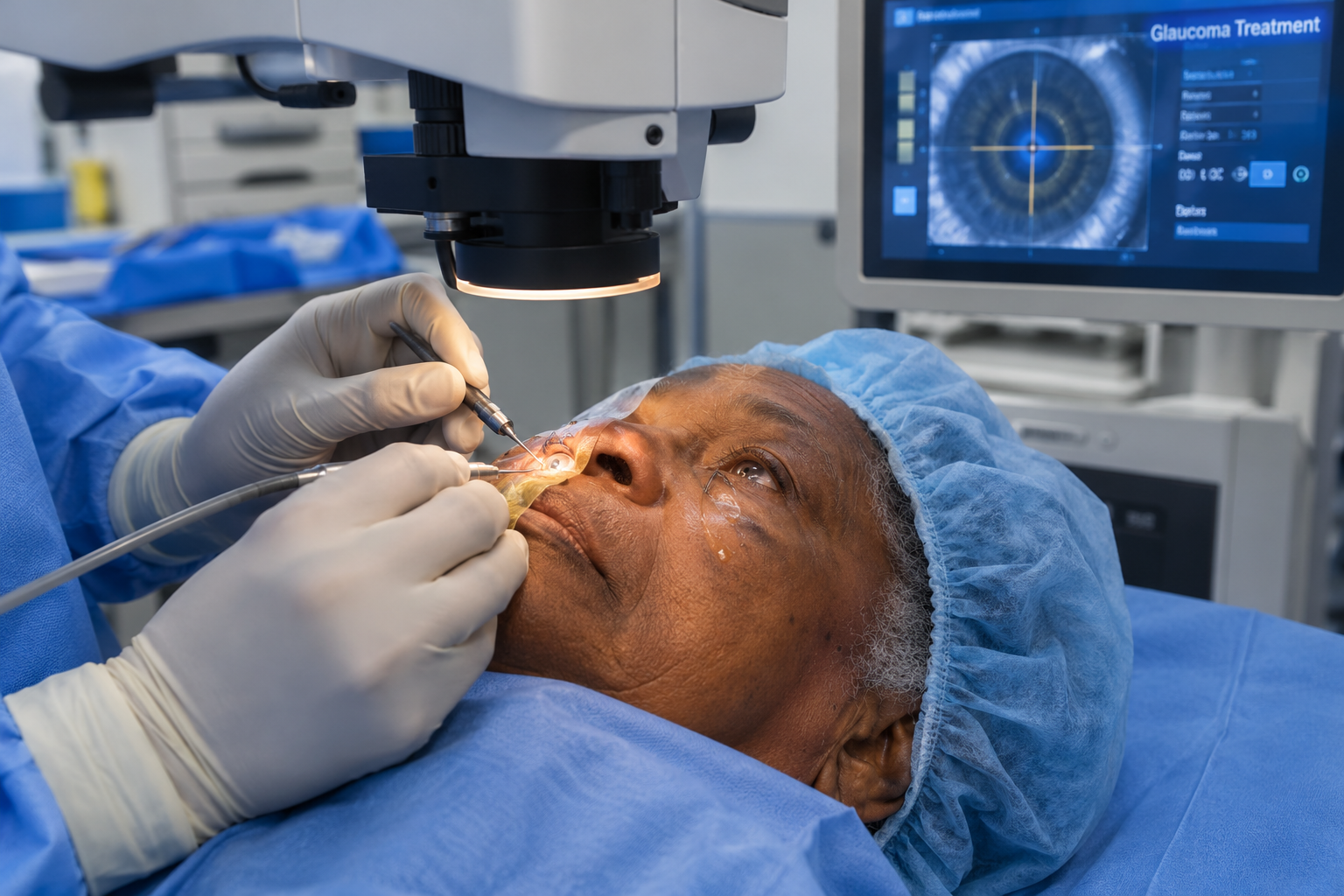
- Surgical Precision: Advanced training in procedures including SLT laser, Durysta, iDose TR, iStent, Hydrus, OMNI canaloplasty, goniotomy, and glaucoma drainage implants for end stage glaucoma.
Glaucoma is not a one size fits all diagnosis. Having fellowship level experience under premier leaders in the field allows us to look at the finest details of your eye anatomy and tailor a treatment strategy that matches your exact stage of disease, lifestyle, and overall eye health.
Cataract Surgery for Glaucoma Patients
When a patient has both cataracts and glaucoma, managing the surgical plan requires specialized perspective. A glaucoma specialist evaluates lens selection differently than a general surgeon, carefully considering how intraocular lens choices and combined procedures will impact long term pressure control and future drop requirements. Patients always choose their own surgeon, and seeking a second opinion is always appropriate when planning combined or complex surgeries.
Global Mission Work and Surgical Insight
I perform glaucoma drainage implant surgery on medical mission trips to Haiti, where patients may not be seen again for a year or more. That experience shapes how I plan surgery for patients with advanced glaucoma here at home.
Bringing National Standards to Our Community: The American Glaucoma Society
Medicine moves quickly, and staying current with research is essential for delivering the best outcomes.
The American Glaucoma Society is the premier professional organization for glaucoma specialists. Established in 1985 by 13 visionary physicians, the society has grown into an international network of over 1,000 subspecialists across 17 countries.
For a practicing clinician to be a member of the society, they must have completed a dedicated clinical glaucoma fellowship following their residency, ensuring that every clinical member has achieved that high bar of specialized training.
Through the society, specialists share scientific insights, refine surgical guidelines, and collaborate on complex clinical cases. When your doctor participates in this active clinical dialogue, your care in Cortlandt Manor, Peekskill, or Beacon benefits directly from the latest worldwide advancements in glaucoma treatment.
Research and Hope: The Glaucoma Foundation
While clinical care focuses on protecting your vision today, research drives the solutions of tomorrow.
The Glaucoma Foundation, founded in 1984 by my mentor Dr. Robert Ritch, is a leading non-profit organization dedicated to finding a cure for glaucoma and reversing vision loss. Headquartered in New York, the foundation supports scientific research and public education.
One of the major focus areas is research into exfoliation syndrome, a common genetic cause of open angle glaucoma that can lead to rapid spikes in eye pressure. Through research grants, global collaborations, and patient support networks, foundations offer real hope for the future while helping patients understand their condition today.
Frequently Asked Questions About Glaucoma Care
Can glaucoma be treated without daily eye drops?
Yes, advanced options like selective laser trabeculoplasty, minimally invasive glaucoma surgeries, and sustained release treatments like Durysta or iDose TR can often reduce or eliminate the need for daily eye drops depending on your specific case.
When is glaucoma surgery recommended?
Surgery is typically recommended when intraocular pressure cannot be safely controlled with eye drops or laser treatments alone, or if visual field testing shows progressive damage despite medical therapy.
What is the recovery time for minimally invasive glaucoma surgery?
Procedures like the iStent or OMNI canaloplasty generally involve a quick recovery with minimal discomfort, allowing patients to resume normal non strenuous activities relatively soon.
Do I need a referral to see a glaucoma specialist?
While some insurance plans require a primary care referral, new patients are always welcome to contact our office directly to verify coverage and schedule an evaluation.
Partnering for Your Vision
Living with glaucoma is a lifelong journey, but it is one you do not have to walk alone. With early detection, personalized treatment, and a dedicated care team, the vast majority of glaucoma patients maintain good functional vision throughout their lives.
Whether you need a routine evaluation, a second opinion on your eye pressure, or an assessment for advanced laser or surgical options, choosing a physician with dedicated subspecialty training gives you the best chance at long term visual health. To learn more about our specialized approaches, please visit our glaucoma service page.
Your vision is precious. Never hesitate to ask your eye doctor about their credentials, their specialized training, and the technology they use, because informed patients make the best partners in eye care.
If you or a loved one is due for a glaucoma screening or wish to discuss specialized management options, please reach out to our team at Hudson Ophthalmology in Cortlandt Manor at 914-737-6360.
Written by Dr. Kerline Marcelin, MD, board certified ophthalmologist and fellowship trained glaucoma specialist